Medical Disclaimer: Jet Set Paw provides educational content based on years of hands-on experience in pet care. We are not veterinarians. Pig ears are high in fat and can pose a risk of Pancreatitis or choking in certain dogs. If your dog is vomiting or acting lethargic after eating a pig ear, consult your veterinarian immediately.
By Sandy, Founder of Jet Set Paw
In my decades of raising dogs, from my tricolor companion Nick to my adventurous German Shepherd, I’ve seen my fair share of “hairy” pig ears. I remember the first time I noticed those stiff bristles; I was worried they might poke or irritate my dog’s throat.
I’m Sandy, and I’m here to share why those tiny hairs aren’t usually the biggest concern when it comes to this popular treat.
Drawing from my years of hands-on care, I’ll explain what you should actually be looking for to ensure your dog’s snack time stays safe and healthy.
Jet Set Paw: The Quick Verdict
- Are the hairs dangerous? No. They are made of keratin (like fur) and are safely digestible.
- The Real Risk #1: Fat Content. Pig ears are very high in fat and can trigger Pancreatitis in sensitive dogs.
- The Real Risk #2: Bacteria. Salmonella is a known risk with natural chews; always wash your hands after handling.
- The Real Risk #3: Choking. Once the ear gets small enough to swallow, take it away immediately.
What are pig ear treats?
Pig ear treats are exactly what they sound like – dried ears from pigs given to dogs as a chew toy and snack.
These treats, made by cleaning real pig ears, removing excess fat, and drying them out, are a natural and appealing option for dogs. The addition of flavors by some manufacturers further enhances their appeal.
Dogs are often drawn to pig ear treats for several reasons. First, they have a strong, meaty smell that dogs find irresistible.
The chewy texture also satisfies dogs, giving them something to work on. Chewing on pig ears can help clean a dog’s teeth and gums, which is an added benefit. These treats keep dogs occupied and can help relieve boredom or anxiety.
Many dogs see pig ears as a special treat, making them excited and happy when they receive one.
The hairs on pig ears
Pig ears have hair because, like most mammals, pigs have hair covering their bodies, including their ears. This hair serves several purposes for pigs in nature.
It helps protect their skin from sunburn, insect bites, and minor scratches. The hair also helps pigs regulate their body temperature and can even assist with their sense of touch.
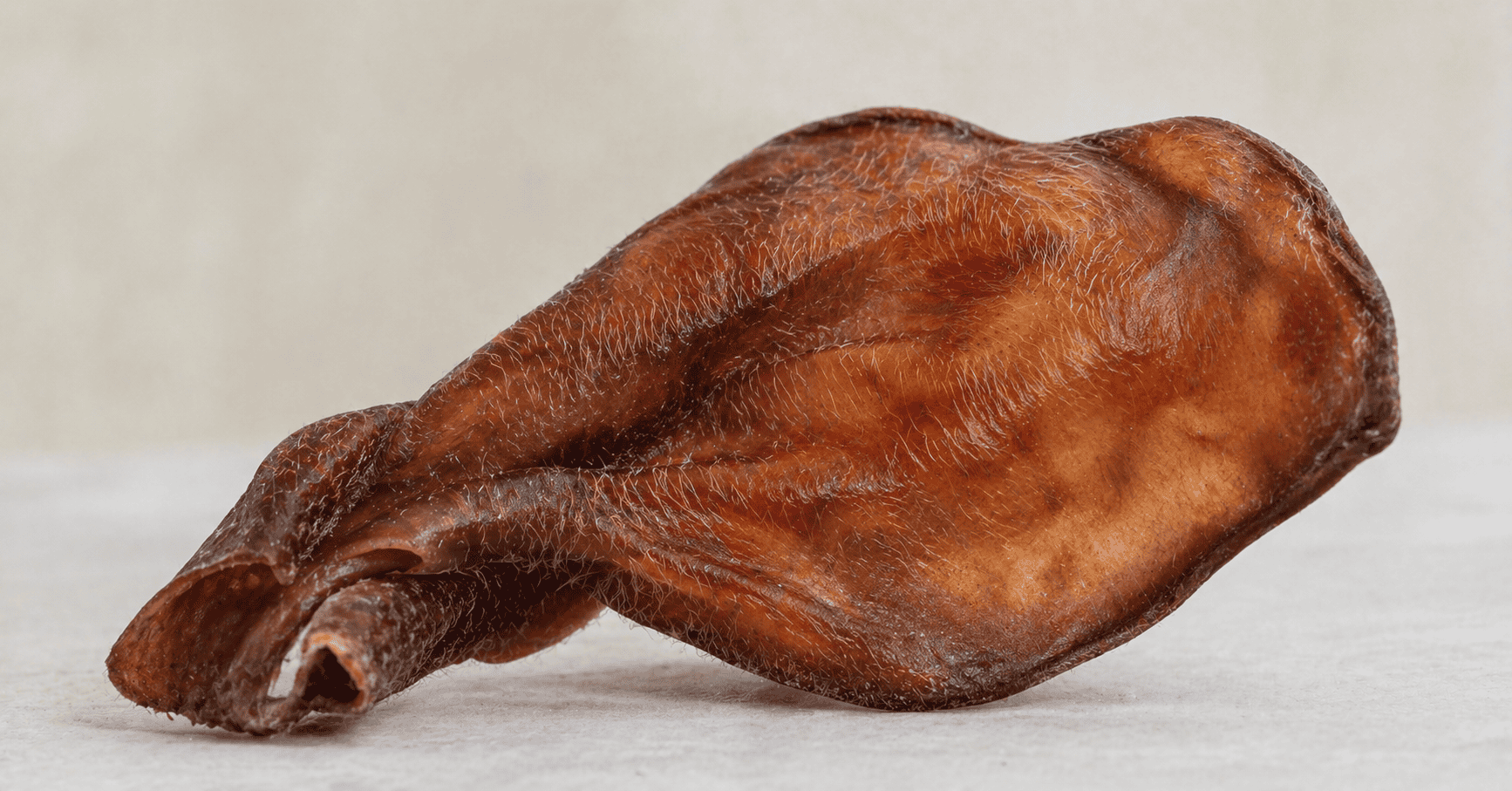
When pig ears are processed into dog treats, not all of the hair is removed. The manufacturing process typically involves cleaning the ears and then dehydrating them.
While this process might remove some hair, it doesn’t remove all of it. The remaining hair becomes dry and stiff, often sticking out from the surface of the treat.
Some companies may try to remove more hair than others, but it’s common to find at least some hair on most pig ear treats. This is why dog owners often notice these hairs when giving their pets pig ears.
Are the hairs dangerous for dogs?
Table: Pig Ear Safety—What Matters Most
| Feature | Risk Level | Jet Set Paw Advice |
| Hairs/Bristles | Low | Natural and safe; they pass through the system easily. |
| Calorie/Fat Count | High | Limit to once a week to avoid weight gain or stomach upset. |
| Bacterial Risk | Medium | Buy human-grade or “Made in USA” to ensure proper cleaning. |
| Size/Choking | Medium | Always supervise; pig ears become slippery and easy to gulp. |
For the vast majority of healthy canines, the fine hairs found on pig ear treats are completely harmless. These bristles are comprised of keratin, the same structural protein found in human hair and animal fur.
While keratin is technically indigestible for a dog’s stomach acids, these microscopic bristles do not present a medical issue.
Because they are short, flexible, and entirely softened during the commercial dehydration process, they seamlessly pass through your dog’s digestive tract intact without causing structural irritation or internal damage.
In rare cases, a large amount of hair could form a hairball in a dog’s stomach. Additionally, dogs with pork product allergies might react to pig ear treats, including the hair. It’s important to introduce new treats slowly and monitor your dog for any unusual reactions.
Other concerns about pig ear treats
While pig ear treats are popular, pet owners should be aware of other concerns besides the hair issue. One worry is that pig ears can be a choking hazard, especially for smaller dogs or those who swallow large pieces without chewing properly.
It’s important to supervise your dog while it enjoys a pig ear and take it away if it tries to swallow big chunks.
Some dogs might experience digestive issues after eating pig ear treats. These treats are high in fat, which can cause stomach upset or even lead to pancreatitis in some dogs, particularly those prone to this condition.
I’ve learned the hard way that ‘rich’ treats like pig ears aren’t for every dog. While my German Shepherd could handle the fat content occasionally, my tricolor companion Nick had a much more sensitive system. One pig ear was enough to give him an upset stomach for two days.
This taught me that the ‘hairs’ are just a cosmetic issue—the real lesson is knowing your dog’s fat tolerance and always having fresh water nearby after they finish a greasy chew.
Suppose your dog has a sensitive stomach or is overweight. In that case, limiting their intake of pig ears or avoiding them altogether is best.
Another concern is the risk of bacterial contamination. Like any animal product, pig ears can sometimes carry harmful bacteria such as Salmonella or E. coli.
These bacteria can make both dogs and humans sick. To reduce this risk, buying pig ears from reputable sources and handling them with care is crucial.
Also, wash your hands after touching pig ear treats and store them properly to prevent bacterial growth.
Alternatives to pig ear treats
If you decide that the high fat content or the texture of pig ears isn’t right for your dog, there are many safe, premium chew options available to satisfy their natural urge to gnaw.
These alternatives are broadly categorized into whole-food animal parts and durable manufactured toys.
Natural chews are often made from animal parts, similar to pig ears. Some popular options include:
- Bully sticks: These are made from dried beef muscle and are long-lasting chews.
- Beef trachea: These are hollow and great for dental health.
- Chicken feet: These are crunchy and rich in glucosamine.
- Deer antlers: These are very hard and long-lasting, but be cautious with dogs that are aggressive chewers.
Manufactured alternatives are specially designed products that mimic the texture and appeal of natural chews. These include:
- Dental chews: These are designed to clean teeth and freshen breath.
- Rubber chew toys: These are durable and can be filled with treats.
- Nylon bones: These come in various flavors and are long-lasting.
- Rawhide alternatives: These are made from more easily digestible materials.
Consider your dog’s size, chewing habits, and dietary restrictions when choosing an alternative. Always supervise your dog with new chews and introduce them gradually to ensure they’re safe and well-tolerated.
Tips for safely giving pig ear treats to dogs
Following simple guidelines can help ensure your pet’s safety and enjoyment when giving dog pig ear treats. Here are some key tips to keep in mind:
Supervision is crucial when giving your dog a pig ear treat. Always watch your dog while it chews on the treat.
This allows you to intervene if it tries to swallow large pieces or if the treat starts to break apart in a way that could be dangerous. Taking the treat away when it becomes small enough to swallow whole is also a good idea.
Proper storage of pig ear treats is essential to prevent bacterial growth and maintain their quality. Keep them in a cool, dry place, and store them in an airtight container if possible.
If the treats develop an off odor or appear moldy, discard them immediately. It’s also a good practice to wash your hands after handling pig ear treats to avoid potential bacterial contamination.
Moderation is key when it comes to pig ear treats. While many dogs love them, pig ears are high in fat and calories.
Giving too many can lead to weight gain or digestive issues. Generally, pig ears should be an occasional treat rather than a regular part of your dog’s diet.
The frequency can vary depending on your dog’s size and overall health, but typically, one pig ear per week or less is a good guideline for most dogs.
Following these tips can help ensure that pig ear treats remain safe and enjoyable for your furry friend.
Conclusion
- Harmless Keratin Structure: The remaining bristles on dried ears are made of keratin. While indigestible, they are entirely soft and pass through the gastrointestinal tract harmlessly.
- High Pancreatitis Risks: Pig ears are exceptionally dense in saturated fats and calories. They must be strictly restricted to keep sensitive dogs safe from acute pancreatic flare-ups.
- Bacterial Handling Rule: Natural chews carry a baseline risk of surface Salmonella contamination. Always store them in airtight bins and wash your hands thoroughly after handling.
- Choking Hazard Limits: Always supervise your pet while chewing and immediately confiscate the treat once it wears down to a slick, swallowable size.