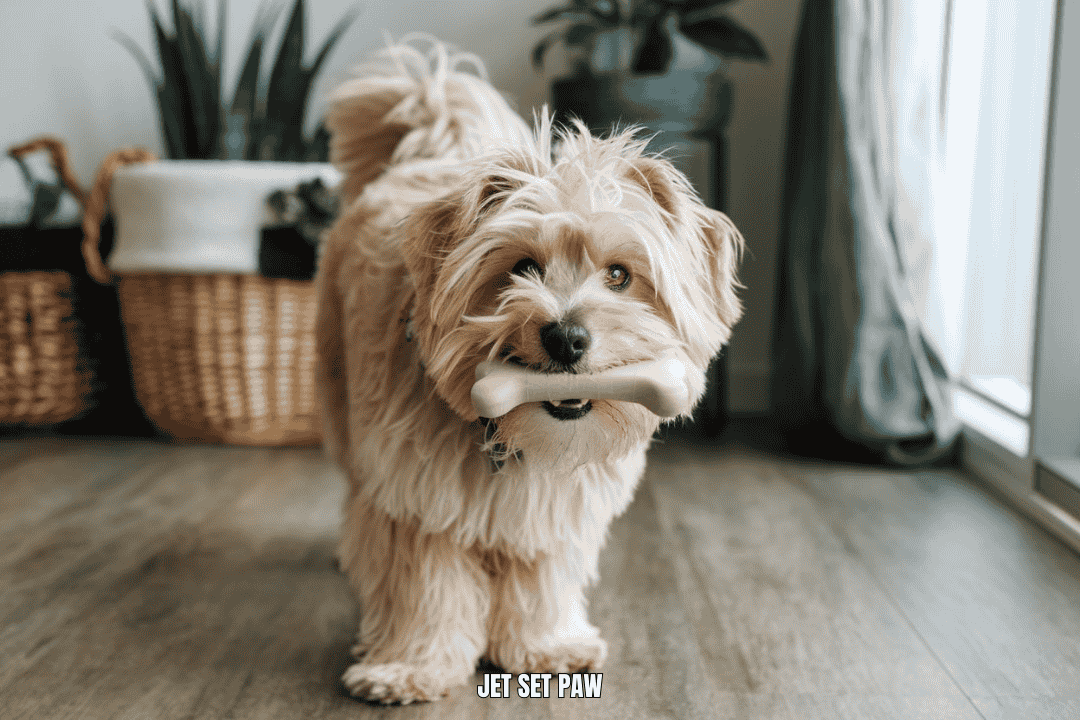
Nylabones are the ‘old faithful’ of the toy bin—rigid, durable, and seemingly indestructible. We love them because they keep our dogs busy for hours and, let’s be honest, they don’t leave a trail of fluff all over the rug.
But because they are so tough, many of us wonder: Are they actually safe?
While they are a go-to for many adult dogs, they aren’t without risks, specifically when it comes to dental health and choking.
In this post, I’ll break down the pros and cons—and share the simple ‘thumbnail test’ I used for my dog, Nick—to help you decide if a Nylabone is the right fit for your pup.
The Pros of Nylabones
One of the most significant advantages of Nylabones is how tough and long-lasting they are. Unlike many other dog toys that get destroyed quickly, Nylabones can withstand a lot of chewing.
This means you don’t have to replace them as often, which can save you money in the long run. Even dogs who are aggressive chewers usually take a while to wear down a Nylabone.
Another great thing about Nylabones is that they actively contribute to your dog’s dental health. As your dog chews on the Nylabone, it acts like a toothbrush, scraping away plaque and tartar from their teeth.
The texture of the bone also massages your dog’s gums, which can promote good oral health. This doesn’t replace regular teeth brushing, but can help maintain your dog’s dental hygiene between cleanings.
Lastly, Nylabones are excellent for satisfying your dog’s natural need to chew. Dogs love to chew – it’s just part of who they are! Chewing can help relieve stress, boredom, and even anxiety in dogs.
Giving your dog a Nylabone provides a safe and appropriate outlet for this natural behavior. This can help prevent your dog from chewing on things they shouldn’t, like your shoes or furniture.
Potential Risks of Nylabones
While Nylabones have many benefits, they also come with some risks that dog owners should be aware of.
One of the main concerns is that small pieces of the Nylabone might break off as your dog chews.
Inspect chews often and remove the toy if large chunks break off or deep gouges appear — those are choking hazards.
These small pieces can be a choking hazard, especially for dogs who tend to swallow things without chewing properly. It’s essential to keep an eye on your dog while using a Nylabone and check the toy regularly for any signs of damage.
Another potential risk is tooth damage or wear. Although Nylabones are designed to be safe for dogs’ teeth, some veterinarians worry that the hard plastic material might be too harsh for certain dogs.
This could lead to worn-down or even broken teeth, especially in older dogs or those with dental issues. If you notice your dog’s teeth looking worn or seem to be in pain while chewing, it’s best to consult your vet.
The most serious risk is intestinal blockage. If your dog manages to break off and swallow a large piece of the Nylabone, it could get stuck in its digestive system. This is a serious medical emergency that might require surgery to fix.
While this doesn’t happen often, it’s still a risk. It’s crucial to choose the right size Nylabone for your dog and replace it when it shows signs of significant wear and tear.
Safety Guidelines for Using Nylabones
One of the most important things to remember when using Nylabones is to choose the right size for your dog. A Nylabone that’s too small can be a choking hazard, while one that’s too big might be hard for your dog to enjoy.
Generally, pick a Nylabone bigger than your dog’s mouth. This makes it less likely that your dog will swallow large pieces. Always read the packaging to see what size is recommended for your dog’s weight and breed.
It’s also crucial to keep an eye on your dog when they’re chewing on a Nylabone, especially at first. This lets you make sure your dog is using the toy safely and not trying to swallow big chunks.
Supervision also helps you spot signs that the Nylabone might be causing problems, like pain or discomfort. If you can’t watch your dog while they’re chewing, it’s better to put the Nylabone away until you can.
Lastly, make sure to replace Nylabones when they start to wear out. Over time, the ends of the Nylabone can become sharp or ragged, which could hurt your dog’s mouth. If you see small pieces coming off or the Nylabone is getting worn down, it’s time for a new one.
A good rule of thumb is to replace the Nylabone when the knobs on the ends are chewed down to the same width as the smaller part of the bone. Regular checks will help ensure your dog’s chew toy stays safe.
Alternatives to Nylabones
Natural chew toys are a popular alternative to Nylabones. These include bully sticks made from beef muscle and antlers from deer or elk. Many dog owners prefer these because they’re natural and often more easily digestible than plastic toys.
Bully sticks can keep dogs busy for hours and are great for dental health. Antlers are rugged and long-lasting, but some vets worry they might be too hard for certain dogs’ teeth. As with any chew toy, it’s essential to supervise your dog and choose the right size.
Rubber chew toys are another good option. Many of these are designed to be tough and long-lasting, similar to Nylabones. Brands like Kong make rubber toys that can be filled with treats, adding extra entertainment for your dog.
Rubber toys are often softer than Nylabones, which some dogs prefer. They’re also less likely to splinter or break into sharp pieces. However, they may not last as long as Nylabones for heavy chewers.
Edible chew treats can also be a great alternative. These come in many forms, from rawhide chews to dental sticks. The advantage of these is that they’re meant to be eaten, so there’s less worry about pieces breaking off and causing problems.
Many are designed to clean teeth and freshen breath as your dog chews. However, these don’t last as long as non-edible chew toys; some dogs might eat them too quickly.
It’s also essential to choose high-quality edible chews and to account for the extra calories in your dog’s diet.
The ‘Thumbnail Test’ from My Backyard
“When I was taking care of my dog Nick, she had a surprisingly strong grip for her size. I always used the ‘thumbnail test’ for her toys: if I couldn’t press my thumbnail into the material, it was too hard and could crack her teeth.
For powerful chewers, Nylabones are a popular choice, but they require constant supervision. If you notice the ends becoming sharp or jagged, or if your dog manages to break off a piece larger than a grain of rice, it’s time to throw it away.
As noted by the ASPCA, any toy that can’t be slightly flexed carries a risk of dental fracture.”
Expert Opinions on Nylabones
Veterinarians have mixed views on Nylabones. Many vets approve of them as a safe dog chewing option, especially for strong chewers who might quickly destroy softer toys.
They often recommend Nylabones to help clean dogs’ teeth and provide mental stimulation. However, some veterinarians express concerns about the potential for tooth damage, especially in older dogs or those with dental issues.
They also warn about the risk of intestinal blockage if large pieces are swallowed. Most vets agree that the key to using Nylabones safely is choosing the right size, supervising use, and replacing them when worn.
Animal welfare organizations generally take a cautious stance on Nylabones. While they recognize the benefits of providing dogs with appropriate chew toys, many of these organizations emphasize the importance of safety.
For example, the American Society for the Prevention of Cruelty to Animals (ASPCA) includes Nylabones on its list of toys that are generally safe for dogs. Still, they also warn about the risks of choking and intestinal blockage.
These organizations often recommend a variety of chew toys to keep dogs mentally stimulated and cater to different chewing preferences.
They stress the importance of monitoring a dog’s chewing habits and removing any toy that shows signs of significant wear or damage.
Both veterinarians and animal welfare groups emphasize that every dog is different. What works well for one dog might not be suitable for another.
They encourage dog owners to observe their pets closely, try different types of safe chew toys, and consult their veterinarian if they have any concerns.
The consensus is that Nylabones can be a safe and beneficial chew toy for many dogs when appropriately used. Still, they’re not the right choice for every dog.
Conclusion
Nylabones have both good and bad points to consider. They are tough toys that last a long time and can help keep your dog’s teeth clean.
Dogs often enjoy chewing on them, keeping them busy and happy. You can find Nylabones in different sizes and flavors to suit your dog.
However, there are some risks to consider. Some dogs might hurt their teeth if they chew too hard.
If a dog swallows big pieces, it could cause problems in its stomach or intestines. Nylabones also don’t break down in nature, which isn’t great for the environment.
When used correctly, Nylabones can be safe for many dogs. It’s crucial to pick the right size for your dog and check the toy often for damage.
Always watch your dog when they’re chewing, and replace the Nylabone when it gets too worn down.
Every dog is different, so what works for one might not work for another. It’s a good idea to talk to your vet about whether Nylabones are right for your dog.
You should also learn about other chew toy options. Watch how your dog reacts to different toys to see what they like best.
The most important thing is to choose to keep your dog safe and happy. By learning about different options and paying attention to your dog’s needs, you can make the best decision for your furry friend.