
Medical Disclaimer: Jet Set Paw provides educational content based on years of hands-on pet care experience. We are not veterinarians. While the sweet flesh of a pineapple is non-toxic to dogs, its high concentration of natural sugars and citric acid can cause gastrointestinal distress or glucose spikes. Always consult your veterinarian before feeding tropical fruits to dogs with underlying health conditions like canine diabetes, pancreatitis, or chronic obesity.
By Sandy, Founder of Jet Set Paw
In my decades of raising dogs, from my powerful German Shepherd to my tricolor companion Nick, I’ve always loved finding healthy, vibrant ways to add variety to our pets’ bowls.
The moment you slice into a fresh, juicy pineapple on a hot summer afternoon, your pup will likely be right at your feet, capturing those sweet tropical aromas and begging for a taste.
I’m Sandy, and I’m breaking down the exact safety guidelines for sharing this prickly fruit with your canine companion.
Drawing from my years of hands-on pet management, we will explore the unique enzyme benefits hidden within the flesh, the strict portion limits based on your dog’s weight, and how to properly strip away the dangerous structural parts of the fruit to ensure a safe, refreshing snack.
Jet Set Paw: The Quick Verdict
- Is it Safe? Yes, the flesh only. Fresh or frozen pineapple flesh is entirely non-toxic and packed with beneficial vitamins.
- The Real Hazard: The thick, spiky skin and the woody inner core are completely indigestible. If swallowed, they act as rigid foreign bodies that can cause a severe gastrointestinal obstruction or acute choking emergency.
- The Enzyme Factor: Pineapple contains bromelain, a highly active combination of enzymes that helps break down animal proteins and supports gut health when fed in tiny quantities.
- The Sugar Profile: Because it is exceptionally high in natural fructose, feeding large amounts will trigger sudden osmotic diarrhea and vomiting. Treat it as a strict garnish, never a meal replacement.
Yes — dogs can eat small amounts of fresh pineapple as an occasional treat. It is packed with vitamin C, manganese, and fiber. However, because it is high in natural sugar, I always recommend keeping portions small. In my experience raising a German Shepherd and my dog Nick, I found that removing the skin and the woody core is the most important step to prevent a choking hazard.
So, for most dog owners, sharing tidbits of our favorite fruits and foods with our four-legged companions is a natural act of love.
And you may have wondered, as you enjoy a sweet, juicy bite of pineapple, if you can share a taste with your pup.
Pineapple is a nutritious tropical fruit enjoyed by humans for its sweet taste and unique blend of vitamins, minerals, and enzymes. But is this Prickly Pear safe for dogs to eat too?
As it turns out, pineapple can be a healthy part of your dog’s diet. When fed in moderation, it offers several benefits.
But pineapple does have risks for dogs if not prepared properly. In this article, we’ll explore the pros and cons of feeding pineapple to dogs.
You’ll learn how pineapple can improve your dog’s health, what dangers to watch out for, plus helpful tips for giving your dog pineapple safely.
We’ll also share dog-friendly pineapple recipe ideas so you and your furry friend can enjoy this nutritious fruit together.
Background on Pineapple
Pineapple is a delicious tropical fruit that is packed with nutrients and provides some impressive health benefits.
Scientifically known as _Ananas comosus_, the pineapple plant is native to South America and belongs to the Bromeliaceae plant family.
The pineapple fruit itself is made up of many individual berries that fuse around a central core. Pineapples are a good source of vitamin C, manganese, copper, and vitamin B1.
They also contain a group of digestive enzymes known as bromelain that provide anti-inflammatory effects in the body.
Aside from the nutrients found in the fruit itself, pineapples also contain a diverse array of antioxidants and phytochemicals that can help boost health.
Some studies show that compounds in pineapples may have anti-cancer effects, aid immune function, improve fertility, enhance wound healing, and reduce inflammation.
Thanks to their sweet, tart flavor and stellar nutrient profile, pineapples are enjoyed by people around the world.
They can be eaten fresh, used in entrees, blended into smoothies, or incorporated into desserts. When it comes to human nutrition, pineapples are one of the most nutritious tropical fruits available.
Can Dogs Have Pineapple?
Table: Tropical Fruit Profiles and Canine Danger Ratings
| Fruit Variant | Safety Status | Primary Health Risk | Jet Set Paw “Sandy” Portion Rule |
| Pineapple Flesh | Safe (In Moderation) | Osmotic diarrhea from high natural fructose content. | Limit to 2–3 small, bite-sized cubes once or twice a week max. |
| Pineapple Skin & Core | DANGEROUS | Mechanical Blockage or fatal choking hazard. | Never Feed. Meticulously slice away all outer spikes and the hard inner column. |
| Canned Pineapple | Avoid | Extreme sugar overload from heavy commercial syrups. | Never Feed. The concentrated processed sugars can trigger acute gastric inflammation. |
| Mango (Peeled) | Safe (In Moderation) | Choking hazard from the large internal pit. | Remove the skin and pit completely; feed only soft, diced pieces. |
Pineapple is not toxic to dogs and can be included occasionally in a balanced diet. While it is not a necessary food for dogs, small portions can provide certain nutrients and variety as a treat.
Pineapple contains vitamin C, manganese, fiber, and small amounts of B vitamins. It also contains bromelain, a digestive enzyme that may support digestion and reduce mild inflammation.
However, because pineapple is naturally high in sugar, it should only be fed in moderation and never as a daily treat.
Additionally, pineapples contain the digestive enzyme bromelain. Bromelain may aid dogs with digestion, reduce inflammation, and improve gut health and absorption of nutrients.
So, pineapples can be a tasty and healthy snack for dogs. However, moderation is key, as too much pineapple can cause issues.
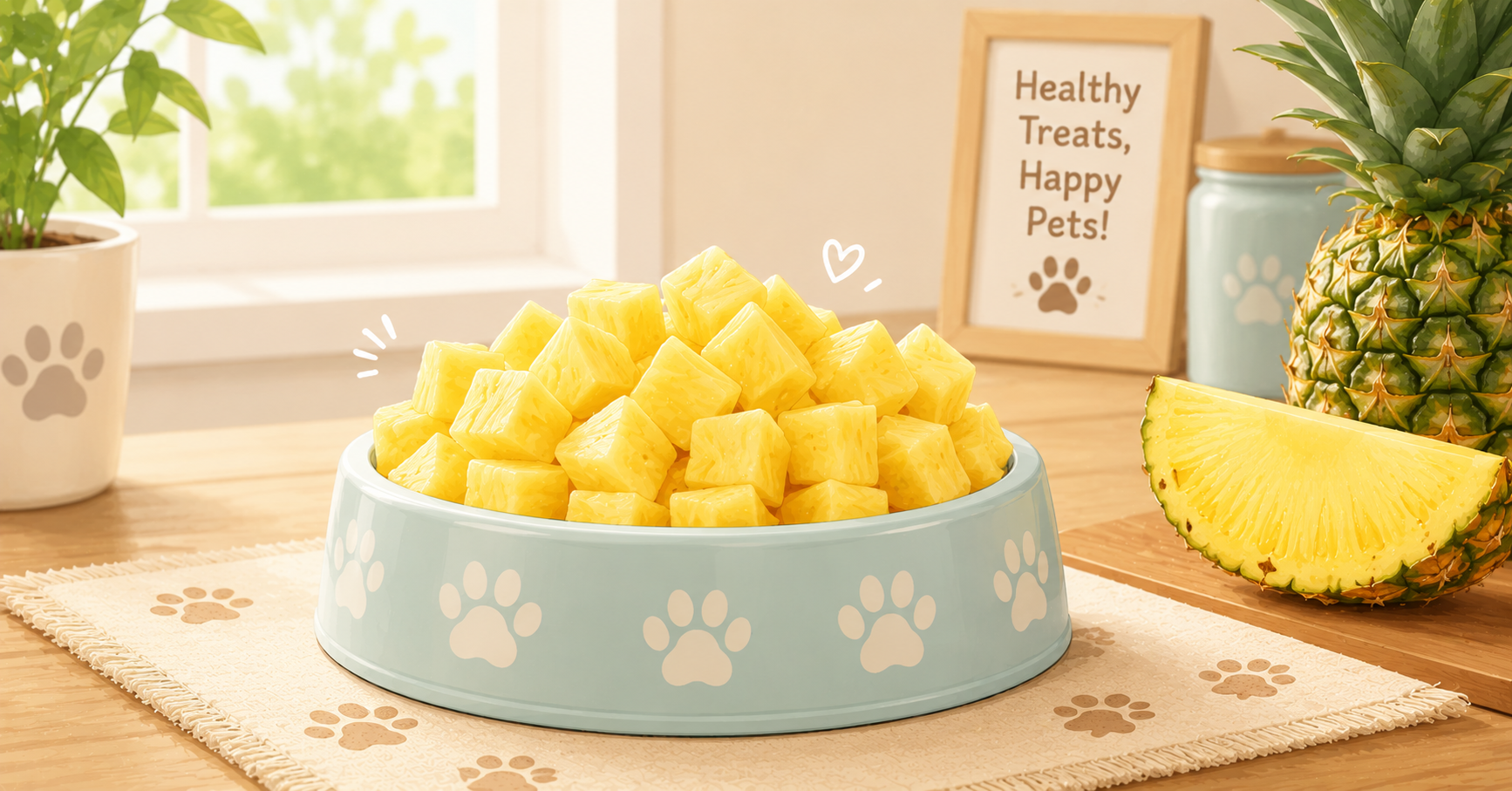
Only give your dog pineapple occasionally and in small quantities. Avoid feeding the core or rind, as they pose choking and digestive risks. Always serve fresh or frozen pineapple in small, bite-sized pieces.
With proper preparation and limits on portion sizes, fresh or frozen pineapple chunks can be a safe, nutritious snack for dogs as part of a balanced diet. Talk with your veterinarian if you have any concerns.
Benefits of Pineapple for Dogs
Pineapple can provide some great health benefits for dogs. One of the biggest benefits is improved digestion.
Pineapples contain bromelain, a group of enzymes that helps dogs break down proteins. This can aid digestion, reduce inflammation in the gut, and prevent diarrhea.
The high fiber content in pineapples can also help regulate dogs’ bowel movements.
Another benefit of pineapple is vitamin C. One cup of pineapple chunks provides over 100% of a dog’s recommended daily intake of vitamin C.
Vitamin C is an essential vitamin for dogs that helps support a healthy immune system. It acts as an antioxidant to protect cells from damage and keeps your dog’s skin, joints, and tissues healthy.
The vitamin C in pineapple can also help dogs absorb iron more efficiently.
Pineapple is low in fat and calories, so it can make a healthy occasional treat for dogs. The sweet taste often appeals to dogs’ preferences as well.
Overall, when fed in moderation, the nutrients, fiber, and enzymes in pineapple can provide dogs with various health benefits. Just be aware of some risks and introduce it properly to avoid digestive upset.
Risks of Feeding Dogs Pineapple
While pineapple can be a healthy snack for dogs in moderation, there are some risks to be aware of before feeding it to your pup.
High Sugar Content
One of the biggest risks of feeding dogs pineapple is the high sugar content. Pineapples have a very high amount of natural sugar, even though it comes from fructose rather than added sugar.
Too much sugar can lead to obesity and diabetes in dogs, just like in humans. The high fructose levels can also cause digestive upset in some dogs, resulting in diarrhea or vomiting.
Choking Hazard
The texture of pineapple, especially raw chunks, can also pose a choking hazard for dogs. Pineapple chunks and tidbits have a firm, chewy texture that dogs may have trouble properly chewing and swallowing.
Make sure any pineapple you feed your dog is chopped into small, bite-sized pieces appropriate for their size.
Never feed dogs large chunks of pineapple that they may try to swallow whole, as this poses a high risk of choking.
It’s best to introduce pineapple gradually and monitor your dog when feeding to ensure they are chewing properly.
You may also want to avoid feeding pineapple to brachycephalic breeds with short snouts, as they are more prone to choking.
I’ve learned the hard way that when a dog loves a sweet flavor, they will completely forget to use their teeth. My German Shepherd was a massive power-chewer, but when it came to a high-value tropical treat, he would try to vacuum up the pieces instantly.
Watching his intense enthusiasm taught me that you can never count on an excited dog to break down a firm, fibrous chunk of fruit.
Nick, being a smaller and more meticulous eater, would lick a piece for minutes, but the structural density of a raw pineapple cube is simply too tough for a dog’s carnivorous jaw mechanics to dissolve.
I tell my community at Jet Set Paw that the secret to tropical fruit safety is total physical containment: I slice the flesh into tiny, pea-sized fragments and freeze them solid before serving.
Freezing changes the structural crunch and forces the dog to actively grind down the piece, eliminating the risk of a slippery chunk bypassing their throat and causing a choking emergency.
With some care and precautions, pineapple can be fed safely, but be aware of the choking risk depending on your dog’s size and breed.
How Much Pineapple Can Dogs Eat?
Pineapple should only be an occasional treat and should never replace a balanced commercial dog diet.
When giving pineapple to dogs, it’s important to limit the amount based on your dog’s weight. Pineapple is high in natural sugar, so too much can cause gastrointestinal upset. Follow these serving guidelines:
– Small dogs under 10 lbs: No more than 2-3 small chunks of pineapple once or twice a week.
– Medium dogs 10 – 30 lbs: About 1/4 cup of pineapple once or twice a week.
– Large dogs 30 – 50 lbs: Up to 1/2 cup of pineapple once or twice a week.
– Extra-large dogs over 50 lbs: Up to 3/4 cup of pineapple once or twice a week.
Always start with small amounts to see how your dog handles it. Gradually increase to the recommendations above if your dog seems to tolerate it well. Limit high-sugar foods like pineapple to occasional treats, not everyday meals.
Monitor your dog after feeding pineapple. Diarrhea or vomiting can be signs that they’ve had too much. Drinking extra water and urinating more frequently are also common. Adjust serving sizes down if needed to prevent these symptoms.
Tips for Feeding Pineapple Safely
Pineapple can be a healthy snack for dogs if fed properly and in moderation. Here are some tips for safely incorporating pineapple into your dog’s diet:
– Remove the skin and core first, as they can be choking hazards. The fruit itself is the safest part to feed.
– Chop the pineapple into small, bite-sized pieces to prevent choking. Avoid feeding large chunks.
– Pair pineapple with other dog-friendly fruits or foods. For example, you can mix small amounts of bite-sized pineapple into plain yogurt, cottage cheese, or a dog’s regular meal.
– Introduce pineapple gradually and look for any signs of an allergic reaction. Start with just a few small pieces at a time.
– Always monitor your dog when giving pineapple as a treat. Make sure they chew thoroughly before swallowing.
– Avoid feeding pineapple every day. Reserve pineapple as an occasional treat in moderation. Too much can lead to digestive upset.
– Stay away from canned pineapple or pineapple juice, as they contain added sugars. Raw, fresh pineapple is the healthiest.
– Check Existing Metabolic Conditions: Pineapple may be highly unsuitable for dogs with underlying systemic conditions, such as canine diabetes or chronic kidney disease. Always check with your vet if you are unsure.
– Never Feed Leaves, Stems, or Rind: While the beneficial enzyme bromelain supports digestion within the soft fruit flesh, the woody leaves and tough outer rind contain highly concentrated, coarse plant fibers. Ingesting these sharp, dense structures will cause severe mechanical irritation, vomiting, or a dangerous blockage inside a dog’s intestines.
I remember when the summer heat would get particularly intense; instead of just offering raw pieces, I started making what I call my signature ‘Pineapple Pops.’
I would take those fresh, bite-sized pieces and freeze them overnight inside silicone molds. Because my tricolor companion Nick had a smaller jaw profile, I was extra careful to keep the frozen fragments no larger than the size of a thumbnail to prevent an accidental throat obstruction.
It quickly became an absolute favorite hydrating treat in our household. I always made sure to double-check that every single strand of the tough core was removed—seeing how much my German Shepherd loved to bolt his food without chewing, I knew that a hidden piece of that woody column could easily trigger an immediate choking emergency.
Expert Note: While my dogs loved these “Pineapple Pops,” I always kept the portions small. PetMD confirms that while pineapple contains the beneficial enzyme bromelain, it is also high in sugar, meaning it should only make up about 10% of a dog’s daily calories.
By following these feeding tips, pineapple can be a tasty and nutritious occasional treat for dogs to enjoy safely. Monitor your dog and adjust amounts accordingly.
Signs of Pineapple Allergy in Dogs
While pineapple can be a healthy, low-calorie treat for dogs, some dogs may be allergic to it. Signs of an allergic reaction can include:
– Diarrhea: Pineapple contains a lot of fiber as well as bromelain enzymes, both of which can cause loose stools or diarrhea in some dogs. If diarrhea occurs after feeding pineapple, stop giving it and see if the diarrhea resolves.
– Vomiting: Some dogs may vomit after eating pineapple due to an allergy or sensitivity. If vomiting occurs, do not feed the pineapple again.
– Itching or skin irritation: Dogs with food allergies can develop itchy skin, rashes, or hives after eating the offending food. If itching, redness, or skin irritation occurs after feeding pineapple, it should be avoided in the future.
– Swelling of the mouth or throat: In rare cases, dogs may have an anaphylactic reaction to pineapple. Signs can include puffy eyes, lips, or face, as well as swelling of the mouth and throat. This requires immediate veterinary care.
Pay close attention to your dog’s reaction after giving them pineapple. Discontinue feeding it if any signs of an allergic reaction develop.
If itching, diarrhea, vomiting, or swelling occur, avoid pineapple in the future and consult your vet if reactions are severe.
Most dogs can enjoy pineapple safely and gain nutritional benefits, but allergies do occur in some dogs. Monitor your dog’s response to identify any adverse effects.
Pineapple Recipes for Dogs
Pineapple makes for a tasty and healthy treat for dogs. Here are some recipe ideas for incorporating pineapple into your dog’s diet:
Frozen Pineapple Treats
– Blended Fido Popsicles: Puree fresh pineapple chunks in a blender with a splash of plain water until completely liquid. Pour the golden puree into ice cube trays and freeze overnight for a soft, lickable summer treat.
th.
– The Probiotic Melon Topper: Dice fresh pineapple into tiny, pea-sized fragments. Mix a single spoonful of the fruit into two tablespoons of plain, unsweetened Greek yogurt to create an enzyme-rich kibble topper.
– Hydrating Pineapple Broth Biscuit: Simmer a single large core slice of pineapple in two cups of water for 15 minutes to extract the essence. Discard the core, let the water cool completely, and use the infused low-sodium liquid to rehydrate your dog’s dry training treats.
Pineapple Topper for Kibble
– Dice fresh pineapple into small pieces.
– Mix a spoonful or two of the diced pineapple into your dog’s regular kibble at mealtime to add natural sweetness and flavor.
– The vitamin C and bromelain from the fresh pineapple will give your dog an antioxidant boost.
Pineapple Infused Dog Bones
– Simmer a large cubed piece of fresh pineapple for 15 minutes in 2-3 cups of water.
– Remove the pineapple and reserve the infused water.
– Add 2 tablespoons of pineapple water to your recipe when making homemade dog biscuits or bones.
– The pineapple essence will add sweetness and aroma.
Plain Pineapple Treats
– Slice fresh pineapple into bite-sized cubes.
– The natural sugars and juiciness of the fresh fruit are often enough on their own for dogs.
– Offer a few pieces at a time as a healthy sweet snack.
Pineapple adds vitamins, flavors, and fun to treats for your dog. Just be sure to introduce it gradually and watch for any signs of allergies. When prepared safely, pineapple makes for a nutritious snack.
Conclusion
- Enzyme-Rich Garnish: Contains active bromelain enzymes that efficiently support protein breakdown and intestinal nutrient absorption when fed in tiny quantities.
- Mandatory Structural Stripping: Complete removal of the woody core, spiky rind, and crown leaves is required to prevent life-threatening gastrointestinal obstructions.
- Strict Portion Controls: High natural fructose levels require tight limits (such as 2–3 tiny cubes for a small dog) to prevent osmotic diarrhea and blood sugar spikes.
- Zero Syrups or Preservatives: Strict avoidance of commercial canned pineapple and processed juices is mandatory due to dangerous added sugars.