
Medical Disclaimer: Jet Set Paw provides educational content based on years of hands-on pet care experience. We are not veterinarians. While plain, unseasoned okra is non-toxic and nutrient-dense for dogs, it contains naturally occurring oxalates that can complicate underlying renal conditions. Always consult your veterinarian before introducing fibrous vegetables to dogs with a history of calcium oxalate bladder stones or chronic kidney disease.
By Sandy, Founder of Jet Set Paw
In my decades of raising dogs, from my powerful German Shepherd to my tricolor companion Nick, I’ve always advocated for enriching our pets’ bowls with wholesome, low-calorie greens.
When you are preparing a warm stew or chopping up fresh vegetables in the kitchen, it is entirely natural for your dog to sit by your side, fixated on those crisp green pods and begging for a taste.
I’m Sandy, and I’m breaking down the exact safety guidelines for introducing okra to your dog’s diet. Drawing from my years of hands-on pet care, we will look at how to avoid the “slime factor” that can upset a sensitive stomach, the mandatory portion sizes based on weight, and how to safely navigate the hidden medical risks of high-oxalate vegetables.
Jet Set Paw: The Quick Verdict
- Is it Safe? Yes. Plain, unseasoned, raw, steamed, or boiled okra is completely non-toxic and safe for dogs in moderation.
- The Real Danger: Fried or Pickled Okra. Never feed restaurant scraps or pickled variants; the heavy frying oils can trigger acute pancreatitis, while the garlic, onions, and excess sodium in pickles are highly toxic to dogs.
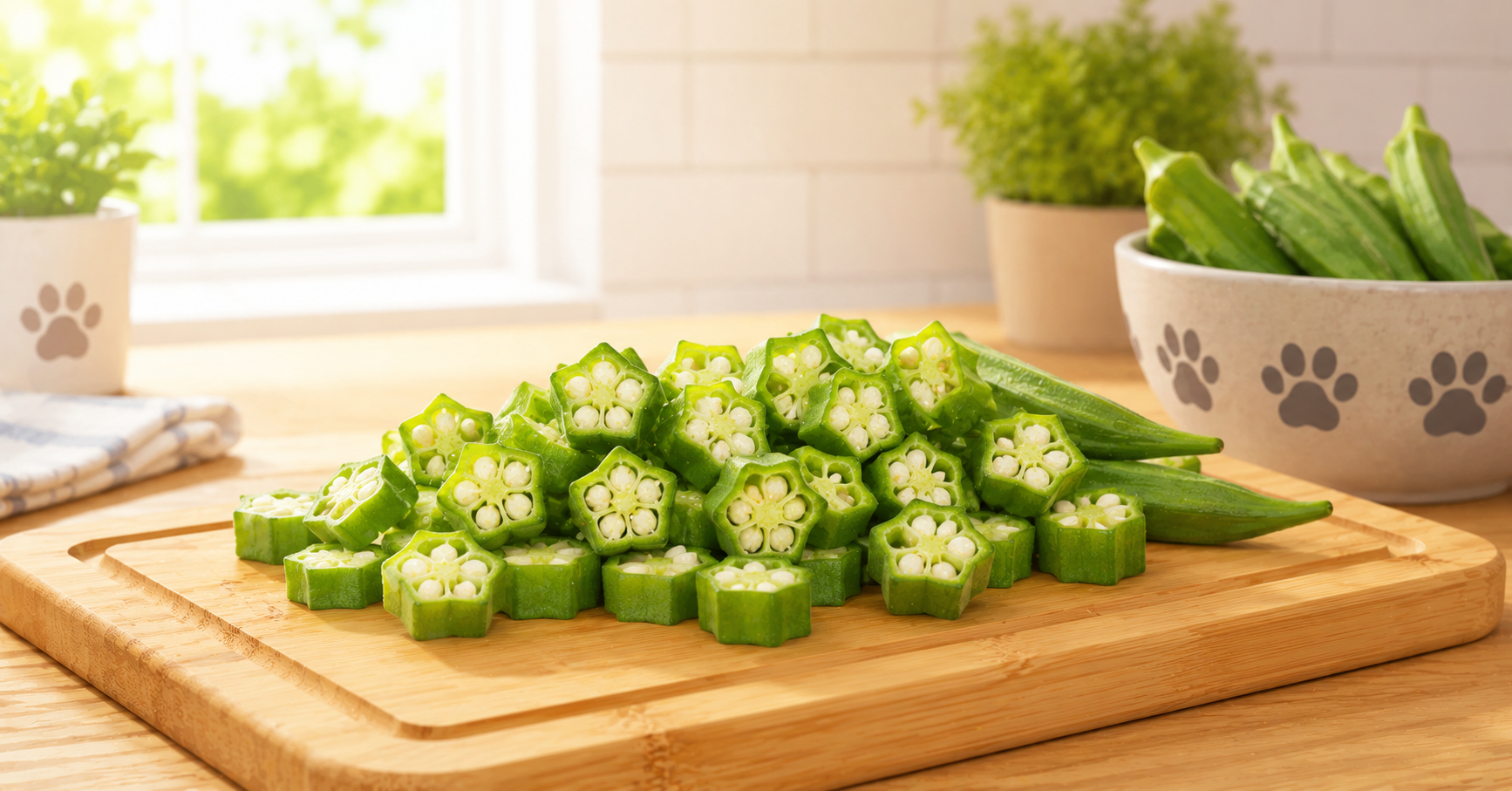
- The Choking Blockade: Okra pods are incredibly fibrous and stringy. You must slice them into small, disc-shaped wheels before serving to prevent an immediate esophageal choking hazard or an intestinal blockage.
- The Kidney Stone Warning: Okra is high in calcium oxalates. If your dog belongs to a breed genetically prone to bladder stones (like Miniature Schnauzers or Shih Tzus), okra should be strictly avoided.
Okra is a green vegetable popular in many parts of the world. It’s known for its unique texture and mild flavor. Okra pods are long and slender, with a slightly fuzzy exterior.
People often use okra in soups, stews, and stir-fries. Some folks even enjoy it fried or pickled. This veggie is packed with nutrients like fiber, vitamins, and minerals, making it a healthy choice for humans.
As pet owners, it’s crucial to understand what foods are safe for our furry friends. Dogs have different digestive systems from humans, and some foods that are harmless to us can be dangerous for them.
Knowing which foods are safe helps keep our dogs healthy and prevents accidental poisoning. It also allows us to share healthy treats with our pets and add variety to their diets.
By being informed about dog-safe foods, we can make better choices for our canine companions and avoid unnecessary trips to the vet.
Can Dogs Have Okra?
Table: Okra Weight-Based Serving Guidelines
| Dog Size Group | Weight Metric | Safe Maximum Serving | Jet Set Paw “Sandy” Safety Step |
| Toy / Small | Under 10 lbs (e.g., Chihuahuas) | 1–2 tiny sliced wheels (Once a week) | Dice extra finely; small throats can easily gag on the mucilage (slime) coating. |
| Medium | 10 – 30 lbs (e.g., Cockers) | 1 tablespoon of sliced pods (1–2 times a week) | Serve steamed or boiled without a single drop of butter, oil, or salt. |
| Large | 30 – 50 lbs (e.g., Pitbulls) | 2–3 tablespoons of sliced pods (2 times a week) | Excellent low-calorie volume filler. Mix directly into their standard daily kibble. |
| Extra Large | Over 50 lbs (e.g., GSDs) | 1/4 cup of sliced pods (2 times a week) | Monitor their stool consistency for 24 hours after their first introductory serving. |
Yes, dogs can eat okra in moderation.
Good news for dog owners! Your furry friend can indeed enjoy okra as a treat. It’s safe for dogs to eat this green vegetable, but like many human foods, it should be given in moderation.
Okra can be a healthy snack for your dog when offered occasionally and in small amounts. Remember, while eating okra is okay for dogs, it shouldn’t replace their regular, balanced diet.
Rest assured, okra is not poisonous or toxic to dogs. Unlike other human foods, such as chocolate or grapes, okra doesn’t contain any substances harmful to canines.
This means you don’t need to panic if your dog sneaks a bite of okra from your plate or garden. However, just because it’s not toxic doesn’t mean dogs should eat large quantities of it.
As with any new food, it’s best to introduce okra slowly and in small amounts to avoid any digestive upset.
Need practical portion sizes and meal timing? See our feeding tips for pitbulls.
The Nutritional Benefits of Okra for Dogs
1) Low in calories
Okra is a great low-calorie treat for dogs. This is excellent news if you’re watching your pup’s weight or if they need to shed a few pounds.
Okra contains few calories, so you can give your dog a tasty snack without worrying about them packing on extra pounds.
This makes it a healthier alternative to many store-bought dog treats, which are often high in calories and fats.
2) High in fiber
Okra is packed with fiber, which can be great for your dog’s digestive system. Fiber helps keep things moving smoothly in your dog’s gut, potentially preventing constipation and promoting regular bowel movements.
It can also help your dog feel full, which is helpful if they always beg for food. Just remember, too much fiber can cause stomach upset, so it’s vital to introduce okra slowly and in small amounts.
3) Rich in vitamins and minerals
This green veggie is a powerhouse of nutrients that can benefit your dog’s health. Okra contains vitamins like A, C, and K, which support your dog’s immune system, vision, and blood clotting.
It also has minerals such as potassium, which is good for heart health, and magnesium, which helps with muscle and nerve function.
While dogs should get most of their nutrients from their regular dog food, the extra boost from okra can be a nice addition to their diet.
Potential Risks of Feeding Okra to Dogs
a) Choking hazard
While okra can be a healthy dog treat, knowing the potential choking risk is essential. Whole okra pods can be tricky and stringy, which might be hard for some dogs to chew correctly.
This is especially true for small dogs or those who gulp food without chewing. To avoid this risk, cutting the okra into small, bite-sized pieces before giving it to your dog is best. This way, your pup can enjoy the treat safely without the danger of choking.
b) Digestive issues if overfed
Like many human foods, too much okra can upset your dog’s stomach. If you give your dog too much okra, they might experience digestive problems such as diarrhea, vomiting, or gas.
This is often because of the high fiber content in okra. While some fiber is suitable for dogs, a sudden increase can be hard on their digestive system.
I’ve learned the hard way that a sudden introduction of a unique texture can completely disrupt a dog’s digestive baseline. My German Shepherd was a robust boy with an iron stomach, but when it came to slimy or highly mucilaginous vegetables like raw okra, his system would react with sudden, uncomfortable gas.
Nick, being a smaller tricolor companion, was incredibly suspicious of the fuzzy exterior texture and wouldn’t even attempt to chew a raw pod. That kitchen experience taught me that preparation is everything.
I tell my community at Jet Set Paw that the secret to okra success is a light steam treatment: blanching or lightly steaming the sliced wheels breaks down the tough, scratchy exterior fuzz and reduces the thick, jelly-like internal slime.
This makes the vegetable infinitely easier for your dog’s short carnivorous digestive tract to process, eliminating the risk of a sudden bout of osmotic diarrhea or tummy rumbles.
To avoid these issues, give your dog only a small amount of okra and watch for any adverse reactions. Always introduce new foods slowly and in moderation.
c) Possible allergic reactions
Although it’s rare, some dogs might be allergic to okra. Signs of an allergic reaction can include itching, swelling, difficulty breathing, or an upset stomach.
If you notice any of these symptoms after giving your dog okra, stop feeding it to them right away and contact your vet.
It’s always a good idea to watch your dog closely when introducing new food to their diet, including okra. If you’re worried about allergies, you can ask your vet to test your dog before trying new foods.
How to Safely Feed Okra to Your Dog
When feeding okra to your dog, proper preparation is key. Start by washing the okra thoroughly to remove any dirt or pesticides.
It’s best to serve okra to your dog raw or lightly cooked without any seasoning. Avoid using oils, spices, or salt, as these can harm dogs.
Cut the okra into small, bite-sized pieces to prevent choking, especially for smaller dogs. If you cook the okra, steaming or boiling are good options, but ensure it’s cooled down before serving.
The amount of okra you give your dog depends on their size and overall diet. Generally, treats, including vegetables like okra, should make up no more than 10% of your dog’s daily calorie intake.
Start with just one or two small pieces of okra for a medium-sized dog and see how they react. If they tolerate it well, you can gradually increase the amount, but always in moderation.
As for how often you can feed okra to your dog, it’s best to think of it as an occasional treat rather than a regular part of their diet.
Once or twice a week is plenty for most dogs. Remember, your dog’s central nutrition should come from their regular dog food.
Okra and other vegetables should be seen as a supplement to their diet, not a replacement for balanced dog food.
Always keep an eye on your dog after introducing any new food, and consult with your vet if you have any concerns about adding okra to your dog’s diet.
Other Vegetables Safe for Dogs
Many vegetables are safe and healthy for dogs to eat. Here’s a list of some dog-friendly veggies:
- Carrots
- Green beans
- Sweet potatoes
- Pumpkin
- Broccoli
- Cucumber
- Spinach
- Peas
- Celery
- Bell peppers
These vegetables can be a great way to add variety to your dog’s diet and provide extra nutrients. Remember to introduce any new food slowly and in small amounts.
While okra is a good vegetable choice for dogs, some of these other options might have different benefits or drawbacks:
Carrots, like okra, are low in calories and high in fiber. Their crunchy texture is also great for dental health. Sweet potatoes are higher in calories than okra but are packed with vitamins and can be good for digestive health.
Green beans are similar to okra in being low-calorie and high-fiber. They’re often recommended for dogs on a diet. Pumpkin is excellent for digestive issues and can help with diarrhea and constipation.
Broccoli is nutrient-rich like okra, but should be given in smaller amounts as too much can cause gas. Cucumber is very low in calories and water content, making it a good choice for overweight dogs.
Overall, while okra is a healthy option, these other vegetables can offer a range of benefits and can be rotated in your dog’s diet for variety. As with okra, always prepare these vegetables properly and feed them in moderation.
When to Avoid Giving Okra to Your Dog
1) Health Conditions That Require Strict Avoidance
While plain okra is highly beneficial for the vast majority of healthy canines, it must be strictly avoided if your pet suffers from specific systemic disorders:
- Calcium Oxalate Bladder Crystals: Okra contains a high baseline concentration of organic oxalates. When filtered through the renal system, these compounds bind directly with blood calcium, forming painful urinary stones that cannot be dissolved with diet and require invasive surgery. Breeds like Miniature Schnauzers and Shih Tzus should stay completely away from okra.
- Inflammatory Bowel Disease (IBD): The dense, complex structural plant fibers can put excessive mechanical strain on an inflamed or hypersensitive intestinal lining, triggering a sudden flare-up of painful cramping or gas.
- The Diabetic Advantage Note: Contrary to generic treat warnings, plain steamed okra is an exceptionally low-calorie, low-glycemic asset for obese or diabetic canine profiles. The soluble fibers inside the pod actively help slow down glucose absorption in the gut, making it an excellent volume-filler that satisfies their appetite without causing dangerous blood sugar spikes
2) Immediate Signs of Intolerance or Allergic Reaction:
Although a true dietary allergy to okra is rare, it is essential to monitor your dog’s physical baseline for 24 hours after their very first bite.
- Cutaneous Irritation: Excessive scratching, rubbing their face along the carpet, or the sudden emergence of red skin rashes and hives.
- Facial Angioedema: Visible swelling of the muzzle, lips, eyelids, or tongue, which requires immediate veterinary intervention.
- Acute Gastric Expulsion: Sudden vomiting, severe flatulence, or loose, water-saturated stools caused by an intolerance to the rich fiber network.
If you notice any of these signs after giving your dog okra, stop feeding it to them right away and contact your vet. It’s always better to be safe and get professional advice if you’re worried about a possible allergic reaction.
Remember, every dog is different, and what’s safe for one might not be for another. Always introduce new foods slowly and in small amounts to watch for adverse reactions.
Conclusion
- Low-Glycemic Nutrient Boost: Offers a safe, vitamin-packed, low-calorie treat that safely supports blood glucose management in diabetic or overweight dogs.
- Mandatory Culinary Prep: Must be served thoroughly washed, completely unseasoned, and sliced into small wheels to eliminate choking risks.
- Strict Renal Boundaries: Absolute avoidance is mandatory for dogs with a clinical history of kidney dysfunction or calcium oxalate crystals.
- Occasional Garnish Rules: Should be treated strictly as a supplemental dietary garnish, never exceeding the universal 10% daily treat allotment.