
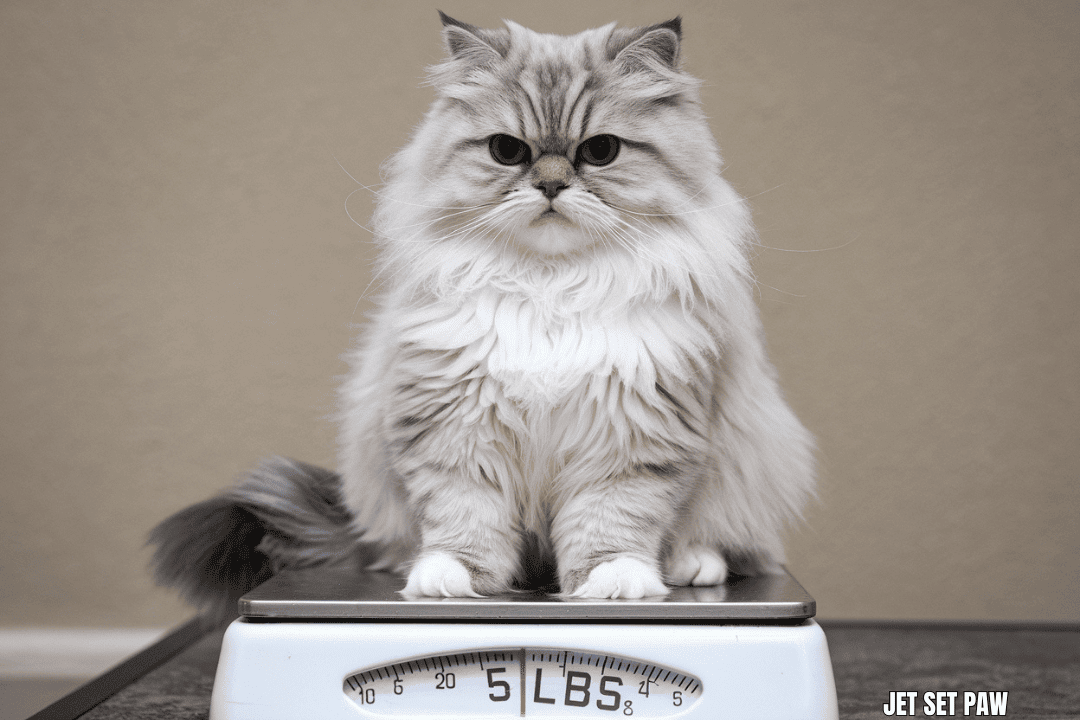
Disclaimer: Jet Set Paw provides developmental growth guidelines based on years of hands-on pet care experience. We are not veterinarians. While a 5-pound weight at 4 months is mathematically ideal for the vast majority of domestic felines, individual skeletal frames vary significantly by breed and sex. Always consult your veterinarian during routine kitten booster visits to track your pet’s specific body condition score.
By Sandy, Founder of Jet Set Paw
In my decades of raising animals, from my powerful German Shepherd to my tricolor companion Nick, I’ve always found the rapid transformation of a kitten to be absolutely breathtaking. At four months old, a kitten enters a unique transitional phase—they are shedding that tiny “baby” look, expanding their limbs, and developing the muscle tone of a miniature adult.
I’m Sandy, and I’m breaking down the physical dimensions and nutritional expectations for a 5-pound, 4-month-old kitten. Drawing from my years of hands-on tracking, we will look at how to tell if your kitten’s growth rate is safely on track, what their adult size might look like, and the best ways to fuel their high-energy structural development.
Jet Set Paw: The Quick Verdict
- The Golden Rule of Feline Growth: Healthy kittens generally gain roughly one pound per month of life. Therefore, a 4-month-old kitten weighing exactly 5 pounds is in the ideal, vibrant sweet spot of development.
- Physical Scale: At this weight, your kitten’s skeletal structure is roughly 10 inches long (excluding the tail) and stands about 8 to 9 inches tall at the shoulder matrix.
- Breed Variations: While perfectly average for standard domestic shorthairs, this weight would be considered small for a slow-growing Maine Coon, or large for a dainty, fine-boned breed like a Singapura.
- Nutritional Blueprint: A 4-month-old kitten’s metabolism burns energy at twice the rate of an adult cat. They require dedicated, nutrient-dense kitten formulas to prevent structural stunting.
Cats are amazing creatures that grow quickly in their first year of life. Just like human babies, kittens start small and rapidly increase in size as they develop. Their growth is fascinating to watch, with noticeable changes happening week by week.
In this blog post, we’ll explore the size of a specific cat: one that weighs 5 pounds and is 4 months old. This particular cat is at an interesting stage in its development; it is no longer a tiny kitten but is not yet fully grown.
We’ll look at how this cat’s size compares to others, its age, and what it might mean for its future growth.
Whether you’re a cat owner or just curious about feline development, this information will help you understand how cats grow and change over time.
Weight of a 4-Month-Old Cat
At 4 months old, kittens are in the middle of their fastest growth period. Most cats this age weigh between 4 and 6 pounds.
Some might be lighter or heavier depending on their breed and other factors. It’s important to remember that every cat is unique, so there’s no one-size-fits-all weight.
A 5-pound cat at 4 months old is right in the middle of the normal weight range. This means the cat is growing at a healthy rate and is neither underweight nor overweight.
It’s a good sign that the kitten is developing well and getting the right amount of food.
Several factors can affect a kitten’s weight. The most important factor is diet—kittens need the right amount of nutritious food to grow properly.
Their breed also plays a role, as some cat breeds are naturally larger or smaller than others. Gender can make a difference, too, with male cats often growing slightly larger than females.
Lastly, health issues or parasites can impact a kitten’s weight, so regular vet check-ups are important to ensure everything is on track.
Physical Size of a 5-pound Cat
A 5-pound cat at 4 months old is starting to look more like an adult cat, but it’s still not fully grown. Let’s look at some measurements and comparisons to give you a better idea of its size.
From nose to tail tip, a cat this size is usually about 14 to 16 inches long. Remember, this includes the tail, which can be pretty long!
Without the tail, the body is probably around 10 inches long. As for height, when standing on all fours, the cat would likely be about 8 to 9 inches tall from the floor to its shoulders.
To help you picture this size, consider some everyday things you might have at home. A 5-pound, 4-month-old cat is about as long as a regular school ruler (including the tail).
It’s roughly the height of a standard coffee mug or a small loaf of bread. In terms of weight, it’s similar to a bag of sugar or a large water bottle.
I’ve learned firsthand that watching a young animal grow requires you to evaluate their body shape rather than just staring at the numbers on a scale. My German Shepherd grew like a runaway freight train, so I was used to massive weekly shifts.
But when tracking smaller animals like Nick during his fourth month, I noticed that he suddenly went through a lanky, leggy stage where his ears looked entirely too big for his skull. He looked skinny, even though the scale read a healthy 5 pounds.
That awkward phase taught me to look for the Body Condition Score (BCS). I tell my community at Jet Set Paw to use the touch test: if you run your hands along your 4-month-old’s sides, you should be able to easily feel their ribs under a thin layer of fat, but the bones shouldn’t look sharp or skeletal.
They are burning through calories so fast at this age that a well-defined waistline is completely normal—they are simply building the framework for their adult coat and muscle.
While these comparisons can help, remember that cats come in different shapes. Some might be longer and leaner, while others could be shorter and stockier. The important thing is that the cat is growing steadily and looks healthy overall.
Growth Rate of Kittens
Kittens grow incredibly fast in their first few months of life. It’s incredible to watch how quickly they change!
In the first weeks after birth, healthy kittens can gain about 1 ounce (or 30 grams) daily. That might not sound like much, but it’s a big deal for a tiny kitten.
When they’re four months old, like our 5-pound cat, kittens have already gone through their fastest growth period.
By this point, they’ve usually tripled or even quadrupled their birth weight. However, they’re still not done growing.
Most cats reach their full size by around 1 year old. But this can vary depending on the breed. Some larger cat breeds, like Maine Coons, might keep growing until they’re 18 months or even 2 years old. Smaller breeds often finish growing sooner.
It’s important to know that even after a cat reaches its full size, its weight might change. Like humans, cats can gain or lose weight based on their diet and activity level.
So, while a cat might stop getting taller or longer after its first year, its weight could still go up or down throughout its life.
Remember, every cat is unique, so some might grow faster or slower than others. As long as a kitten steadily gains weight and looks healthy, it’s growing just fine.
Is a 5-Pound, 4-Month-Old Cat Normal?
A 5-pound cat at 4 months old is generally considered to be at a healthy weight. Most kittens this age weigh between 4 and 6 pounds, so this cat is in the middle of the normal range. This is a good sign that the kitten is growing well and getting the right food.
Table: Feline Weight Milestones & Health Markers
| Kitten Age | Target Healthy Weight | Development Stage Profile | Jet Set Paw “Sandy” Nutrition Plan |
| 8 Weeks (2 Mos) | 2.0 – 2.5 lbs | Socialization window; structural weaning complete; primary core vaccine block begins. | Feed 4 small meals daily of premium kitten wet food to accommodate a tiny stomach. |
| 12 Weeks (3 Mos) | 3.0 – 3.5 lbs | High-intensity predatory play drive peaks; rapid muscle bone elongation phase. | Maintain high-protein diet; ensure constant access to fresh water to support kidney function. |
| 16 Weeks (4 Mos) | 4.5 – 5.5 lbs | Transitional “Sweet Spot.” Permanent adult teeth begin erupting through the gums. | Transition to 3 scheduled meals daily. Provide safe rubber teething toys to soothe gums. |
| 24 Weeks (6 Mos) | 6.0 – 7.5 lbs | Sexual maturity window. Growth velocity begins slowing toward adult baseline dimensions. | Discuss final spay/neuter surgery timing with your vet to prevent territorial marking habits. |
It’s important to remember that every cat is different. Some might be lighter or heavier and still be perfectly healthy. Breed, gender, and individual genetics can all affect a cat’s size.
For example, a Maine Coon kitten might be heavier at this age, while a Siamese kitten could be lighter.
While a 5-pound weight at 4 months is fine, there are times when you might need to worry about a cat’s size. If a kitten this age weighs much less than 4 pounds, it might not be getting enough food or could have health problems.
On the other hand, if it weighs more than 6 pounds, it might become overweight, leading to health issues later in life.
The best way to know if your cat’s size is healthy is to talk to a veterinarian. They can check the cat’s overall health and give you specific advice based on your cat’s breed and individual needs.
Regular vet check-ups are important to ensure your kitten is growing correctly and staying healthy.
Caring for a Growing Kitten
Proper nutrition is super important for a 4-month-old kitten. At this age, they need food high in protein and calories to support their rapid growth.
Most vets recommend feeding kittens specially formulated kitten food until they’re about a year old. This food has the right balance of nutrients that growing cats need.
It’s usually best to feed a 4-month-old kitten several small meals throughout the day. This helps them get enough calories without overeating at any one time.
You can start with four meals daily and gradually reduce to three as they age. Always make sure your kitten has access to fresh, clean water, too.
Exercise and play are as important as good food for a growing kitten. Play helps kittens develop strong muscles and good coordination.
It also keeps them at a healthy weight. Try playing with your kitten for at least 15 minutes, two or three times daily.
There are lots of great toys for kittens. Small balls, feather wands, or toy mice can keep them active and entertained.
You can even make simple toys at home, like a crumpled paper ball or a cardboard box with holes cut in it. Just make sure any toys are safe and don’t have small parts that could be swallowed.
Remember, playtime isn’t just about exercise. It’s also a great way to bond with your kitten and help them feel loved and secure in their new home. Plus, it’s fun for both of you!
You’re helping your kitten grow into a healthy, happy adult cat by providing good nutrition and plenty of play. If you ever have questions about caring for your growing kitten, don’t hesitate to ask your vet for advice.
Conclusion
A 5-pound cat at 4 months old is typically a healthy size. This weight falls right in the middle of the normal range for kittens of this age, usually between 4 and 6 pounds. It’s a good sign that your kitten is growing well and getting the nutrition it needs.
However, it’s important to remember that every cat is unique. Some might be smaller or larger and still be perfectly healthy. Factors like breed, gender, and individual genetics can all affect a kitten’s size and growth rate.
Keeping track of your kitten’s growth is a great way to ensure proper development. You can do this by weighing your kitten regularly, maybe once a week, and writing down the results. This can help you spot any sudden weight changes that might need attention.
It’s also a good idea to consider how your kitten looks and acts. A healthy kitten should have a shiny coat, bright eyes, and lots of energy for play.
Suppose you notice significant changes in your kitten’s weight, appearance, or behavior. In that case, it’s always best to check with your vet.
Remember, the goal isn’t just for your kitten to reach a certain weight but to grow into a healthy, happy adult cat.
You’re giving your kitten the best chance at a long, healthy life by providing good food, plenty of play, and regular vet check-ups.
As your kitten continues to grow, enjoy every moment of this exciting time. Before you know it, your little 5-pound kitty will be all grown up!