
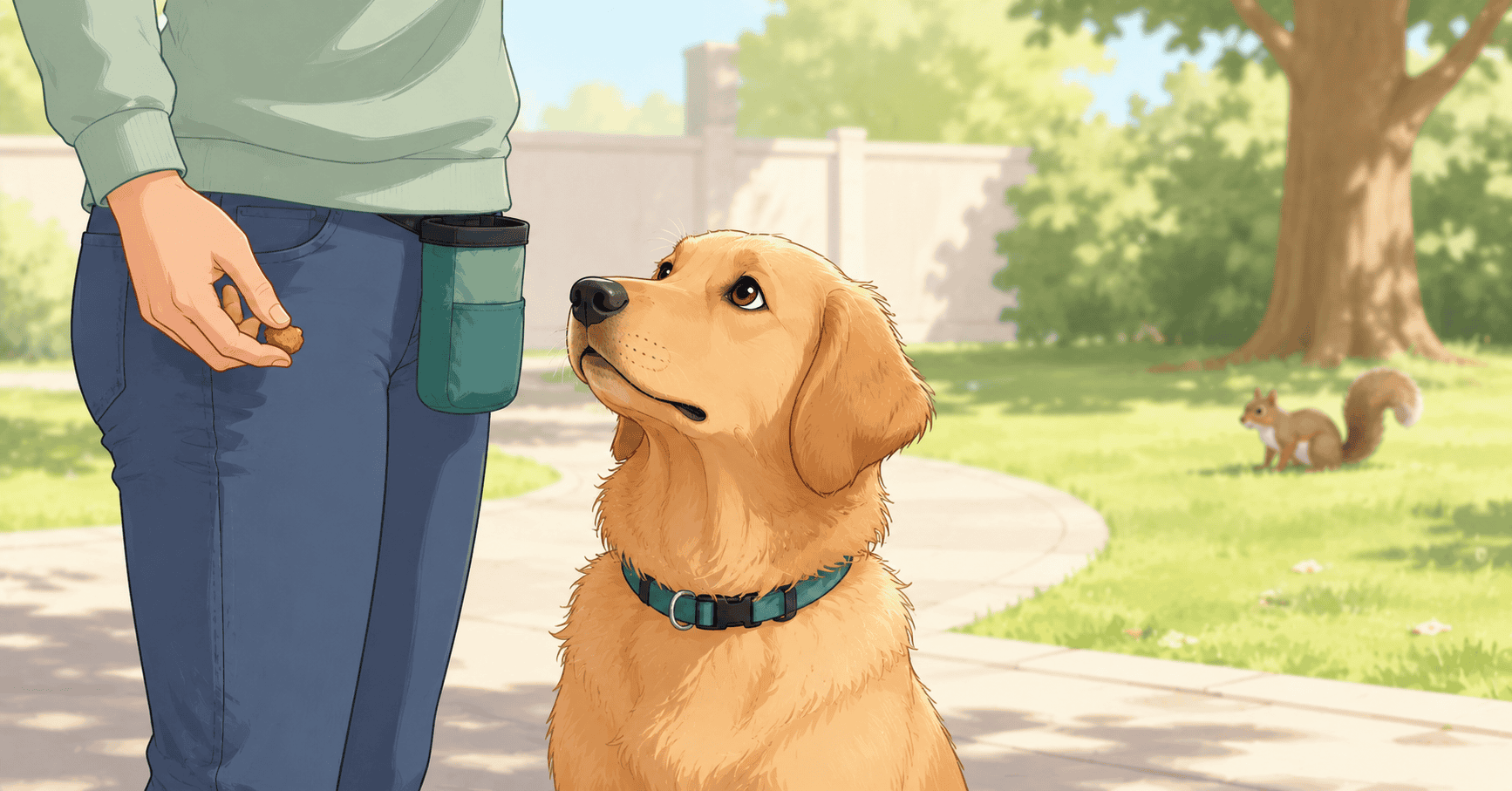
Disclaimer: This article is for educational purposes only and is not a substitute for personalized guidance from a certified veterinary behaviorist (CVB) or certified professional dog trainer (CPDT-KA). Behaviors rooted in anxiety, resource guarding, or fear-based aggression require individualized clinical assessment, not DIY extinction protocols.
By Sandy, Founder of Jet Set Paw
It started innocently enough. I taught Catch-him, my adventurous German Shepherd, a “high five” as a fun party trick.
Within two weeks, that high five had morphed into a relentless paw-swat aimed at my arm, my coffee mug, and once, memorably, a dinner guest’s plate.
What I’d actually trained, without meaning to, was a demand behavior: paw equals attention, every single time.
This is the messy reality behind learning how to unlearn tricks from dogs. It’s not about punishment, scolding, or pretending the behavior never existed.
It’s a structured, science-backed process of redirection, one that respects how dogs actually learn rather than fighting against it.
My tricolor Rat Terrier, Nick, taught me the food-motivated version of this same lesson: a polite nose-nudge for kibble that escalated into full-blown table begging.
What follows is the safe, vet-informed difference between genuinely breaking a habit and accidentally confusing or stressing your dog in the process, because those two outcomes look nothing alike.
Jet Set Paw: The Quick Verdict
- Can you unlearn a dog trick? Yes, through extinction paired with counter-conditioning, never yelling or physical correction.
- Average extinction timeline: roughly 2–3 weeks of consistent non-reinforcement.
- Watch for an extinction burst: a brief, normal spike in the behavior before it fades.
- Safest first step: identify and remove the reward every time, from every household member.
- Call a professional if the behavior is compulsive, anxiety-linked, or escalates despite consistency.
Mapping the Habit — What You’re Actually Unlearning
Before removing a single reward, you need a clear diagnosis. Not every problem behavior is the same animal, behaviorally speaking. A genuine “trick” is an intentional, cued behavior you deliberately taught, as the high five Catch-him offers on command.
An accidental behavior chain, by contrast, develops without deliberate training: a sequence of actions a dog stumbles into that happens to get reinforced, often invisibly, until it hardens into a habit.
Begging, jumping, and pawing almost always fall into this second category, which matters because how to stop an accidental dog trick differs slightly from unlearning something you cued on purpose.
Intentionally trained behaviors respond well to simply withholding the cue; accidental chains require identifying the hidden reinforcer first, since the dog never learned a “command,” only a result.
This reference table breaks down the most common household habits by mechanism:
| Behavior Type | Common Trigger | Typical Reinforcer | Recommended Extinction Method | Estimated Timeline |
|---|---|---|---|---|
| Begging for treats | Owner eating, food prep | Dropped or handed food | Strict non-reinforcement + DRA (cued “place”) | 2–3 weeks |
| Jumping for greeting | Owner arrival, excitement | Eye contact, touch, verbal attention | Withhold attention until four paws are down | 1–2 weeks |
| Pawing for attention | Owner distracted (phone, conversation) | Touch, talking, eye contact | Ignore paw contact + reward calm sit | 2–4 weeks |
| Door-dashing | Door opening, leash cues | Access to outside, chase opportunity | Structured “wait” protocol + management | 3–4 weeks |
| Counter-surfing | Unattended food smells | Stolen food reward | Environmental management + “leave it” training | 2–4 weeks |
Notice the pattern: every reinforcer here is something the dog finds rewarding, not something we intended to offer. That distinction is the entire foundation of safe, effective extinction work.
The Behavioral Science of Forgetting — Why Dogs Don’t Truly “Unlearn”
To understand how to extinguish a behavior in dogs, it helps to borrow the precise vocabulary of operant conditioning rather than relying on vague notions like “breaking” a habit.
Positive reinforcement strengthens a behavior by adding something the dog wants immediately afterward (a treat following a sit).
Negative punishment, often confused with aversive correction, simply removes something desirable following an unwanted behavior (no attention follows the jump).
Extinction is the formal, clinical term for what happens when a previously reinforced behavior stops receiving its reinforcer altogether, repeatedly and consistently.
Here’s the part that surprises most owners: the behavior doesn’t vanish from memory. Catch-him’s brain didn’t erase the paw-swat-for-attention pathway; that neural connection simply weakens from disuse as reinforcement stops arriving.
This is why spontaneous recovery is a documented, normal phenomenon. A dog may suddenly attempt an “extinguished” behavior weeks later, especially under stress or novelty. It isn’t regression or failure. It’s a faint echo of an old pathway testing whether the rules have changed.
Mid-process, owners often encounter an extinction burst: a temporary, sometimes dramatic escalation in frequency or intensity of the unwanted behavior right before it declines.
Nick’s begging, for instance, got noticeably more insistent (more whining, more nose-nudging) in the first several days of withheld reinforcement, before dropping off sharply. This burst is a predictable feature of the process, not evidence that the method is failing.
The Role of Variable Reinforcement Schedules
Behaviors reinforced inconsistently, like begging that occasionally pays off, are notoriously harder to extinguish than those reinforced every time.
This mirrors the same psychological mechanism behind slot-machine play: unpredictable, intermittent rewards generate stronger persistence than predictable ones, because the dog has learned that the next attempt might be the one that works.
From Removal to Replacement — Counter-Conditioning Step by Step
Understanding the science is one thing; applying it without guesswork is another. The following dog behavioral counter conditioning steps give that science a repeatable, structured shape, transforming “just ignore it” into an actual protocol.
Step 1: Identify the cue. Pinpoint exactly what triggers the behavior, whether it’s the sound of a fork against a plate, a hand reaching toward the door, or simply prolonged eye contact from a human.
Step 2: Remove the reward consistently. Every household member must withhold the reinforcer every time, with no exceptions. A single accidental reward (one slipped table scrap) can reset days of progress.
Step 3: Introduce an incompatible cued behavior. This is where differential reinforcement of alternative behavior, or DRA, becomes the centerpiece of the protocol.
DRA means deliberately reinforcing a behavior that is physically incompatible with the unwanted one. A dog cannot jump and sit simultaneously, so cuing “sit” during greetings makes the old behavior structurally impossible to perform.
Step 4: Reinforce the replacement generously. The incompatible behavior needs to become more rewarding than the old one ever was, with higher-value treats, praise, or attention delivered promptly and consistently.
Step 5: Fade the lure. Gradually reduce reliance on hand signals or treat lures until the replacement behavior holds on a verbal cue alone.
Worked Example — Stopping a Dog From Begging for Treats
When addressing stopping a dog from begging for treats, Nick’s case illustrates DRA in real time. Every nose-nudge and whine at the table was met with zero reaction, no eye contact, no “no,” nothing. Simultaneously, he was cued to “place” (a designated mat) the moment mealtime prep began.
Calm settling on that mat earned immediate, high-value reinforcement. Within roughly two weeks, the mat cue alone was enough to redirect him before begging even started, because the replacement behavior had become the more reliably rewarding choice.
Risks, Pitfalls, and What Not to Do
Knowing how to break a dog’s bad habit safely means understanding the mistakes that derail otherwise sound protocols, because well-intentioned owners sabotage their own progress more often than the dogs do.
The most common pitfall is inconsistent enforcement. If one family member reinforces begging while another withholds it, the dog isn’t experiencing extinction at all; he’s experiencing a variable reinforcement schedule, which, as established, is the hardest pattern to extinguish.
Partial consistency doesn’t slow progress modestly; it can reset it entirely, since even occasional reinforcement confirms to the dog that persistence still works.
The second, more serious pitfall involves aversive correction: yelling, leash jerks, shock collars, or physical punishment aimed at suppressing the behavior outright.
These methods may appear to work because they suppress the visible behavior quickly, but they do so by elevating cortisol and stress hormones rather than addressing the underlying reinforcement history.
Suppressed behaviors frequently resurface in riskier forms, including resource guarding, defensive snapping, or generalized fear responses toward the person delivering the correction.
This is a firm safety line: physical or fear-based correction is never an appropriate substitute for extinction and counter-conditioning.
A third, subtler error is mistaking extinction for neglect of a genuine underlying need. Begging rooted in actual hunger, an inadequate feeding schedule, or low-calorie meals isn’t a behavior to extinguish; it’s a nutritional gap to correct.
Similarly, anxiety-driven pawing or whining requires addressing the anxiety itself, not simply withholding attention.
This leads to an important medical caveat: an “accidental trick” can sometimes mask a physical issue. Compulsive pawing, for instance, may indicate joint discomfort, skin irritation, or neurological sensitivity rather than a learned attention-seeking habit.
Any sudden, repetitive, or escalating behavior warrants a veterinary examination before behavioral protocols begin; ruling out medical causes is always step zero.
A Lived-In Lesson — Catch-him, Nick, and the Two-Dog Household Experiment
Running this protocol with two very different dogs under one roof taught me that extinction isn’t a single recipe; it’s a framework that bends to the dog in front of you.
Catch-him’s pawing was high-energy and attention-driven, the direct descendant of that original high-five trick gone sideways.
His version of DRA centered on a “settle on mat” cue: the instant a paw lifted toward me, I turned away and pointed silently to his mat. Settling there, calmly, was the only path back to my attention.
Given his German Shepherd intensity, the early extinction burst was loud and physical, more pawing, more vocalizing, even a brief attempt at jumping as a workaround. It tested my resolve daily.
Nick’s begging habit ran on an entirely different engine: food, not attention. His protocol required zero table-side reinforcement from anyone, ever, paired with a predictable, scheduled feeding routine so his hunger cues weren’t actually being ignored, just redirected to appropriate times.
His extinction burst was quieter but stubborn, persistent nose-nudging that lasted nearly a week longer than expected.
Both dogs tested the same emotional reality: the burst phase makes you want to give in. A single dropped table scrap, a single moment of acknowledging the paw, feels harmless in isolation.
It rarely is. What got us through was consistency held across roughly two to three weeks, the same window the science predicts, until the old pathways simply stopped firing as the default response.
Looking back at that original high five, the one that spiraled into a paw-swat at dinner guests, I recognize now that the fix was never about punishing Catch-him for being communicative. It was about giving that communication a new, calmer address to land on.
Troubleshooting Stubborn Cases — When Standard Extinction Stalls
Even a well-executed protocol can plateau or appear to regress, and recognizing why prevents owners from abandoning a method that’s actually working. Three culprits explain most stalled cases.
The first is spontaneous recovery, the previously discussed reappearance of an “extinguished” behavior weeks later, often triggered by stress, novelty, or a change in routine. This is a normal feature of the extinction curve, not proof of failure, and typically resolves quickly if the household returns to consistent non-reinforcement.
The second, and far more common, culprit is a reinforcement leak: one household member, often unknowingly, rewards the behavior the rest of the family is working to extinguish.
A grandparent slipping table scraps to Nick, or a guest enthusiastically greeting Catch-him’s jump, can singlehandedly maintain a behavior indefinitely.
The third is environmental cue dependence, where the behavior is tightly linked to a specific location or context (only at the dinner table, only near the front door) and hasn’t yet generalized across settings.
A practical troubleshooting checklist:
- Conduct a consistency audit: confirm the replacement cue is being used identically, every time, by every person.
- Conduct a household reinforcement audit: ask each family member, guest, or pet sitter directly whether they’ve rewarded the behavior, even “just once.”
- Apply environmental management: use baby gates, leashes, or crating during predictably high-risk windows (mealtimes, door arrivals) to prevent rehearsal of the unwanted behavior while training catches up.
- Reassess the replacement behavior’s reward value; it may need to be higher-value or more immediately delivered.
If a behavior resists a well-executed DRA protocol for several weeks, escalates in intensity, or shows signs of compulsion (repetitive, ritualistic, difficult to interrupt) or underlying anxiety, it’s time to consult a certified veterinary behaviorist.
These patterns often require pharmacological or clinical behavioral intervention beyond standard extinction work.
The “Sandy-Proof” Conclusion — Action-Oriented Recap
Unlearning a habit, accidental or intentional, comes down to a handful of non-negotiable steps. Keep this list within reach for the weeks ahead:
- Identify the reinforcer before doing anything else.
- Remove the reward every time, for every household member.
- Cue an incompatible replacement behavior.
- Expect a short extinction burst, not a setback.
- Reinforce calm or replacement behavior generously.
- Audit the household for hidden reinforcement leaks.
- Manage the environment during high-risk windows (gates, leashes, scheduled feeding).
- Rule out medical causes for compulsive or escalating patterns.
- Stay consistent through the full two-to-three-week window.
- Call a certified veterinary behaviorist for stalled, compulsive, or anxiety-rooted cases.
Catch-him’s paw-swat and Nick’s table-side begging both faded the same way: not through correction, but through patient, structured redirection. That’s the throughline worth remembering long after this article closes.